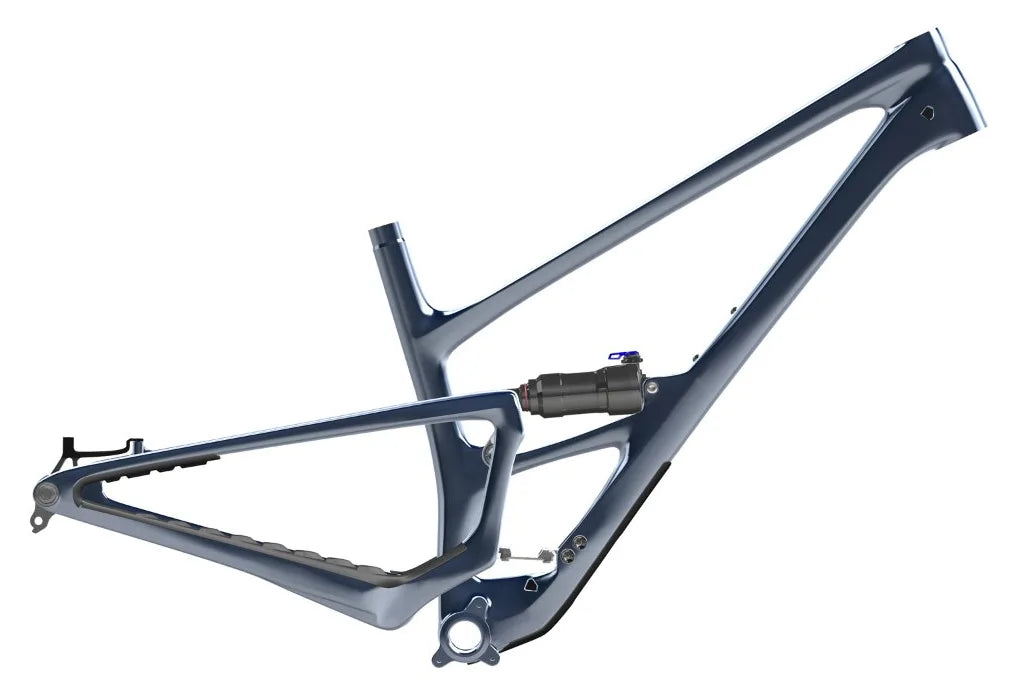
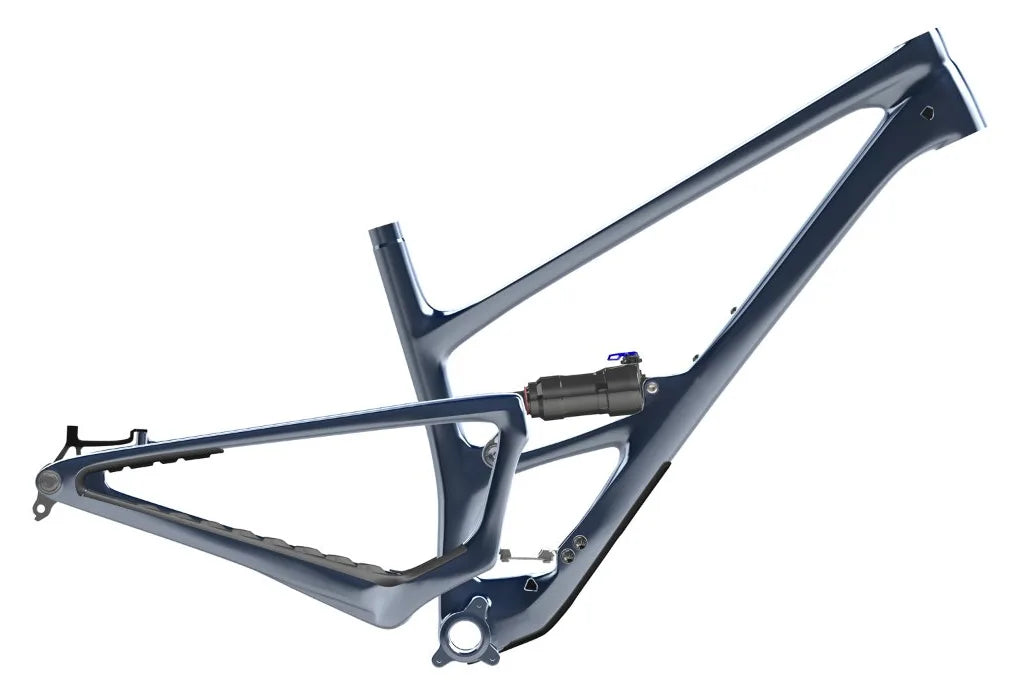
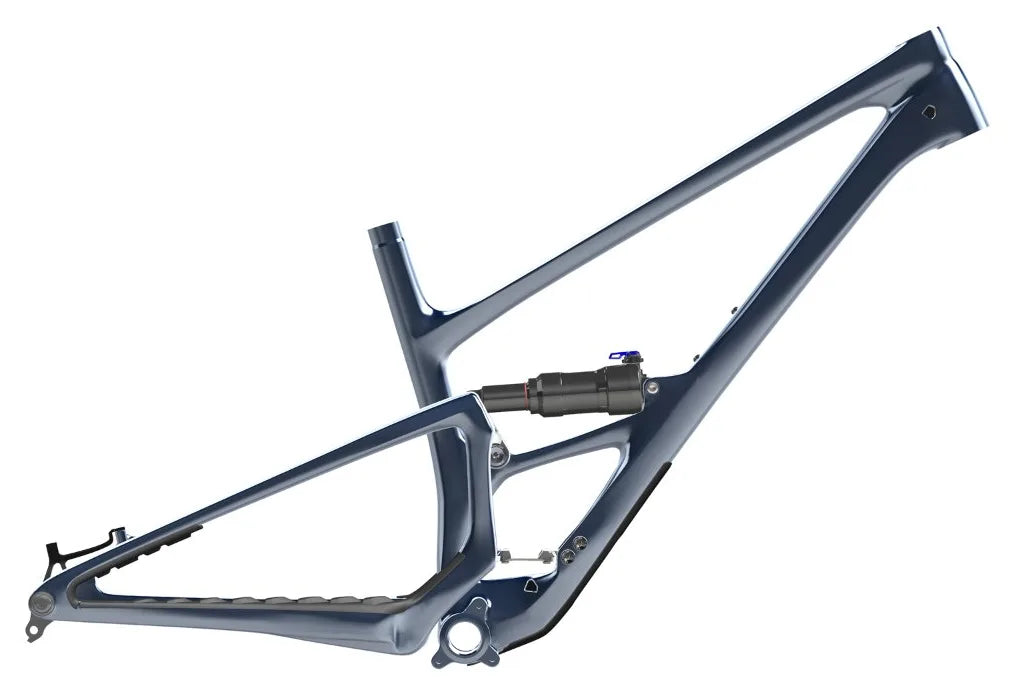
The suspension platform behind every Spot

Spot has been an innovative force in cycling for decades. Whether we're designing a transformative suspension platform, pioneering breakthroughs in drivetrains and mountain bike geometry, or refining pivot hardware down to the last bearing, our approach is forward-thinking, unconventional, and always done in-house.

Everything we build follows the same short list of engineering principles.

OUR ENGINEERING PRINCIPLES

SIX RULES, EVERY BIKE

Everything we create follows a set of core principles:

  • Keep it simple, make it reliable. The most elegant designs simplify complex ideas that can stand the test of time.
  • Everyone appreciates efficiency. The more energy we save on the climbs, the more we have for the descents.
  • Shock lockouts are a design crutch. A great suspension system should never need one.
  • Optimize the whole ride. What's the point of a bike that climbs well but can't crush the descents? And vice versa.
  • Weight still matters. We work extremely hard at delivering maximum capability at category-leading weights.
  • Make more fun. At the end of the day, our job is manufacturing fun.

KINEMATICS · A DEEPER LOOK

KINEMAGIC

The science behind Spot Living Link.

What kinematics is, and why it matters

Kinematics is the nerd word for what your suspension feels like and how it behaves. It's also where most of the bad behavior in a bike comes from. Overly squishy suspension every pedal stroke, a harsh ride even though you're using all the travel, a total loss of traction while pedaling or braking — that all traces back to choices the designers made, or didn't make, about kinematics.

Spot Living Link bikes don't do those things. We obsess over the nuances of suspension behavior because it's the difference between a confident bike and a sketchy one. As riders, our most precious resource is energy, so we toil over features that preserve it.

Anti-squat, focused where you need it

Diggity Anti-Squat

Anti-squat (%) Rear travel (%)
0 25 50 75 100
  1. Top out Low anti-squat for small-bump sensitivity and soft touchdown.
  2. Sag & pedaling zone Sustained high anti-squat through the pedaling zone for unmatched lockout-free efficiency.
  3. Drop-off Anti-squat drops off to minimize pedal kickback.

Anti-squat is the parameter that makes a suspension bike pedal efficiently. Too little and the suspension bobs and saps your energy. Too much in the wrong part of the travel and the rear wheel can't track the ground, sacrificing grip. Either way, you lose.

Spot suspension bikes have always shown superior pedaling performance, but our 3rd generation Living Link system takes it up a level. With unprecedented control over the shape of the anti-squat curve, we can add more where it's most needed and take it away where it isn't. This means more watts to the ground and virtually no pedal induced suspension wallow.

The anti-squat is high at sag and drops off dramatically deeper in the stroke, enabling the rear wheel to track rough terrain like never before.

Power up technical trail with more grip and composure, and less pedal feedback. Climbing terrain of all types is easier, so you can go higher and farther.

Leverage rate, and the leaf spring

Diggity Leverage Rate

  • Diggity 125, no leaf spring
  • Diggity 125
Leverage ratio Rear travel (mm)
3.2 3.0 2.8 2.6 2.4 0 20 40 60 80 100 120
  1. Soft initiation Leaf spring softens the initial stroke for small-bump sensitivity.
  2. The Kinemagic zone The leaf spring flattens the curve through the heart of the travel, widening the mid-stroke range and delivering more millimeters of useable travel than conventional designs.
  3. Progressive ramp The leaf spring force falls away deeper in the stroke. The linkage takes over with a progressive ramp-up.

On the leverage rate side, the inverted leaf spring layout gives us added control as well. While most suspension systems provide a steady ramping of force through the stroke, this Living Link layout lets us change direction midway through.

At full extension, stroke initiation is easier due to a steep beginning curve. Transitioning into sag, the curve flattens and becomes very linear. This gives easier access to the deeper parts of the travel — something not possible with high levels of air spring progression. The results: more performance, less harshness, more usable travel.

The real magic happens at around three quarters into the travel, where the leverage curve actually switches direction, building bottom out resistance for the last portion of the stroke, for a seamless, pillowy landing without compromising bump performance everywhere else.

The leaf spring itself does double duty: a negative spring at top-out that helps with that soft initiation, and a positive spring partway through the stroke that straightens the mid-travel curve. The result is traction when lightly loaded, support when driving into it, and bottom-out protection when you finally need it — without tuning any of it into the shock.

REFRAME THE RULES

LIGHTER. STRONGER. SIMPLER.

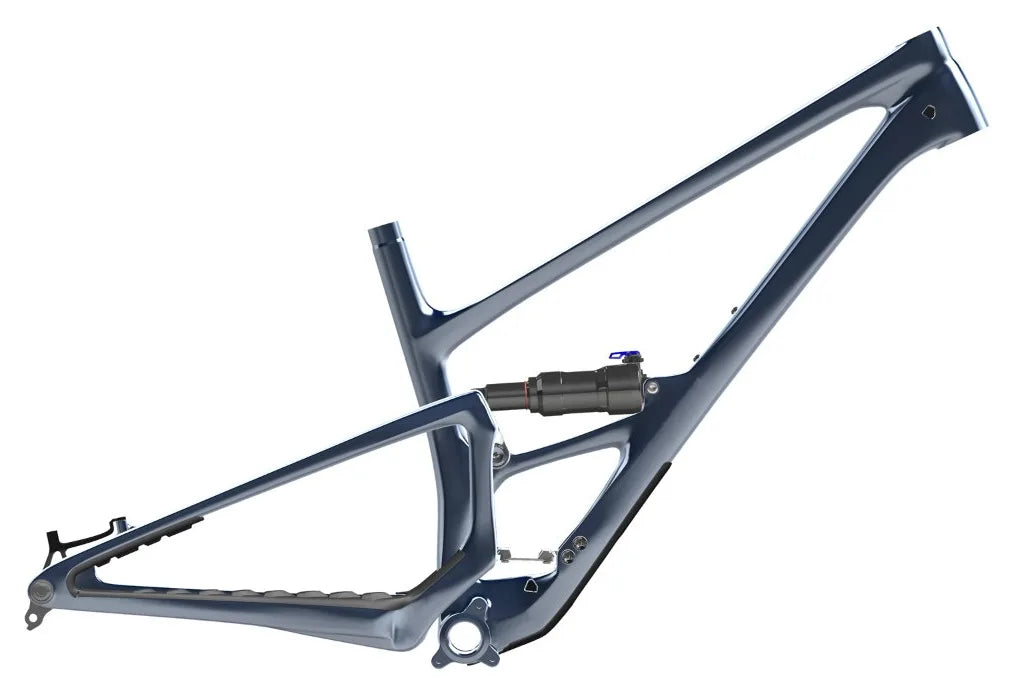
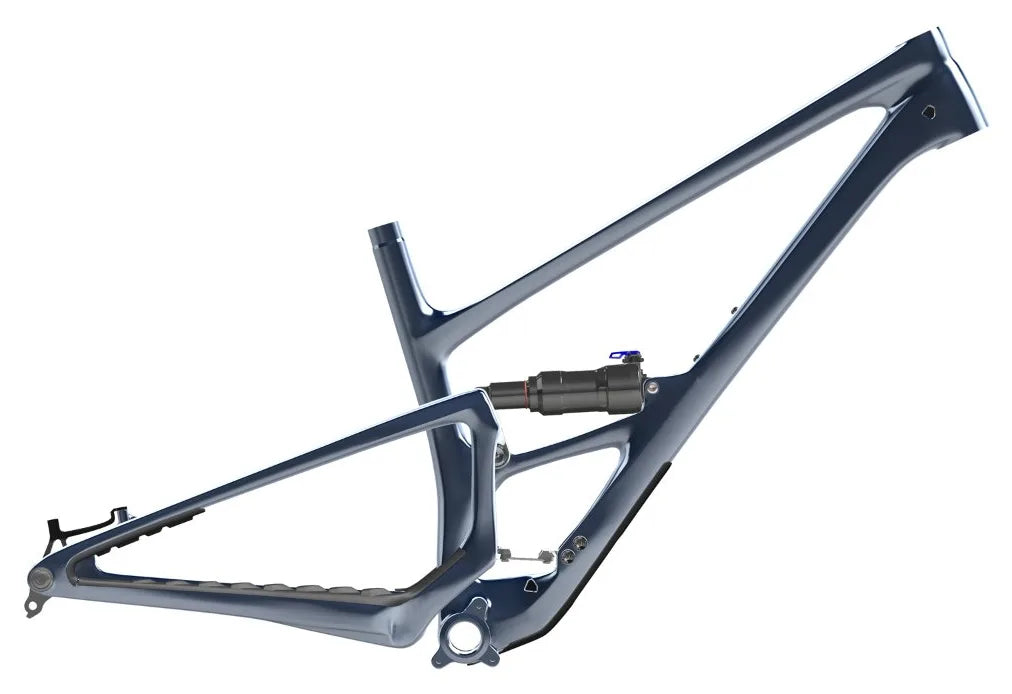
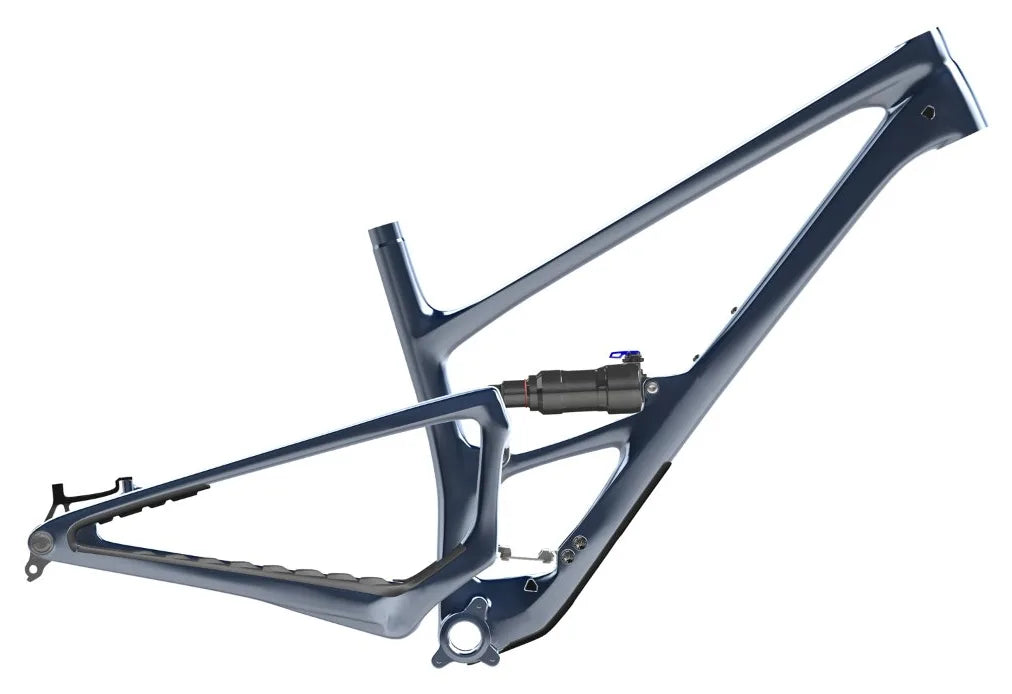
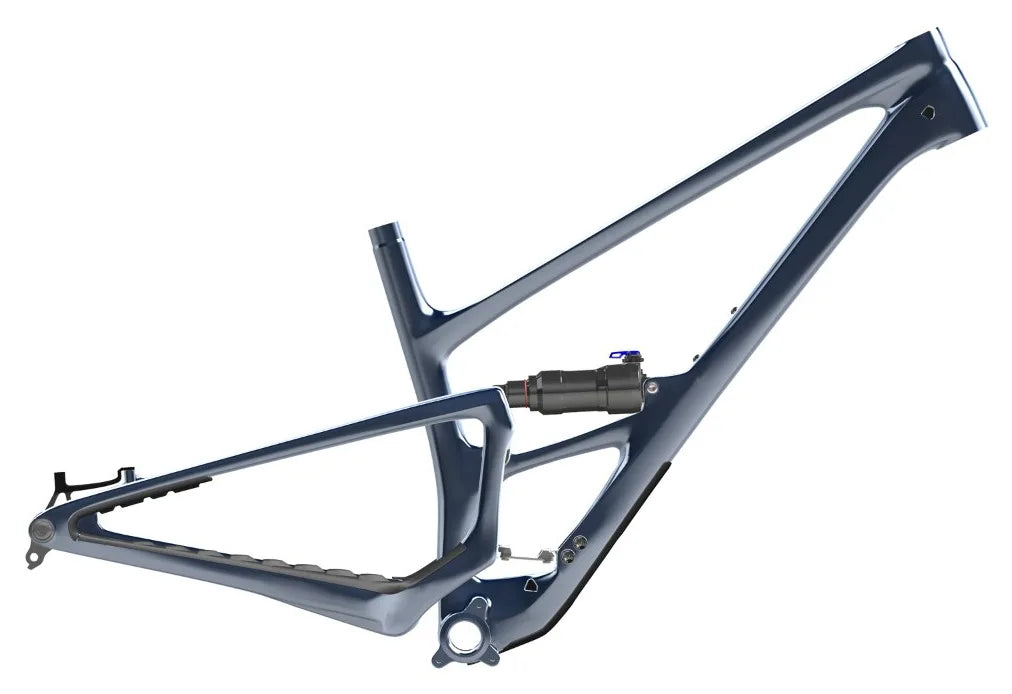
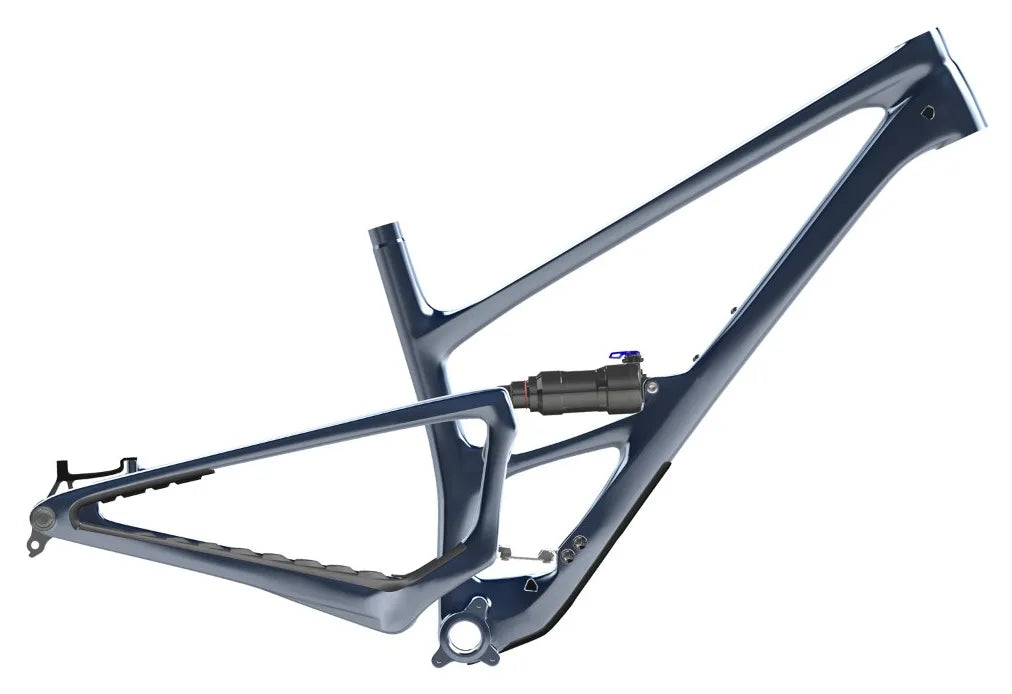
As we all learned in school, triangles are the strongest shape. By subdividing the mainframe, we create a truss-like structure to bolster the shock and evenly distribute forces. We're calling it the Slaybar.

Connecting the leaf spring to the down tube helps align the stress into the axis of the tube and makes use of a high strength area to share the load. The linkage connection points are spread farther apart which lowers the peak forces into the frame members.

It isn't the first asymmetric support you've seen, but the Slaybar ties into the downtube, creating two triangles. Other popular designs run from the toptube and make a triangle and a trapezoid.

Sweating all these details means reduced stress on bearings, metal, and carbon parts alike, allowing us to use less material yet produce a stronger, lower-maintenance frame than ever before.

Using this design, we're able to achieve our design goal of delivering the best possible strength-to-weight ratio.

Girder vs. Truss — where strength comes from

Girder — strength from material
Truss — strength from geometry

Scrub through a full compression-and-rebound cycle to see how the leaf spring works alongside the shock at every point in the stroke. Shop Living Link bikes

What's happening

Rider benefit

THE LEAF SPRING AT WORK

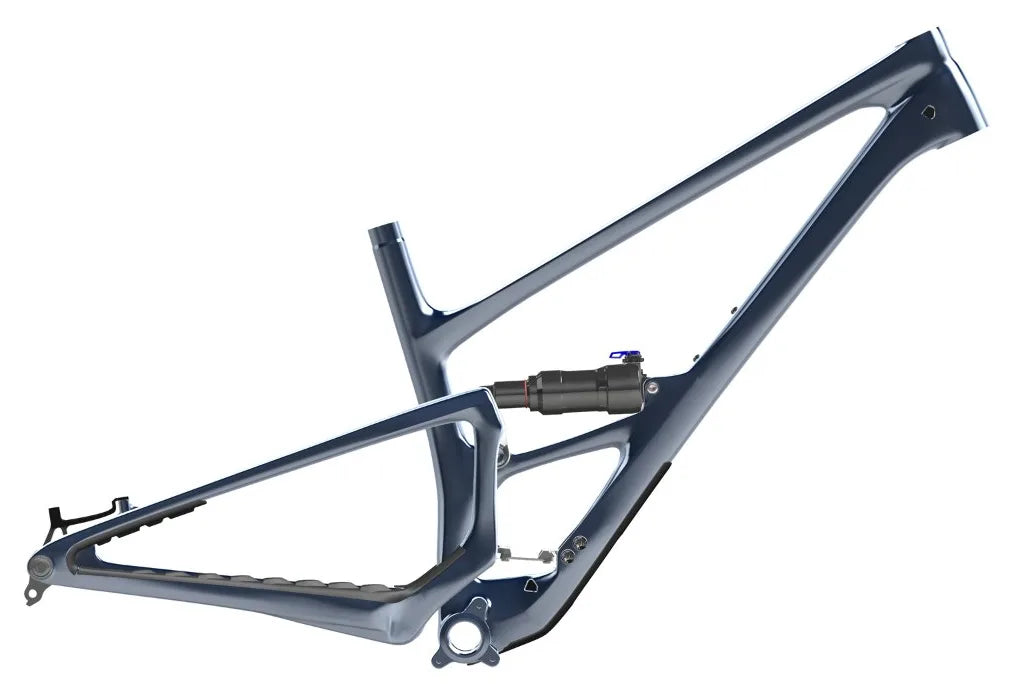
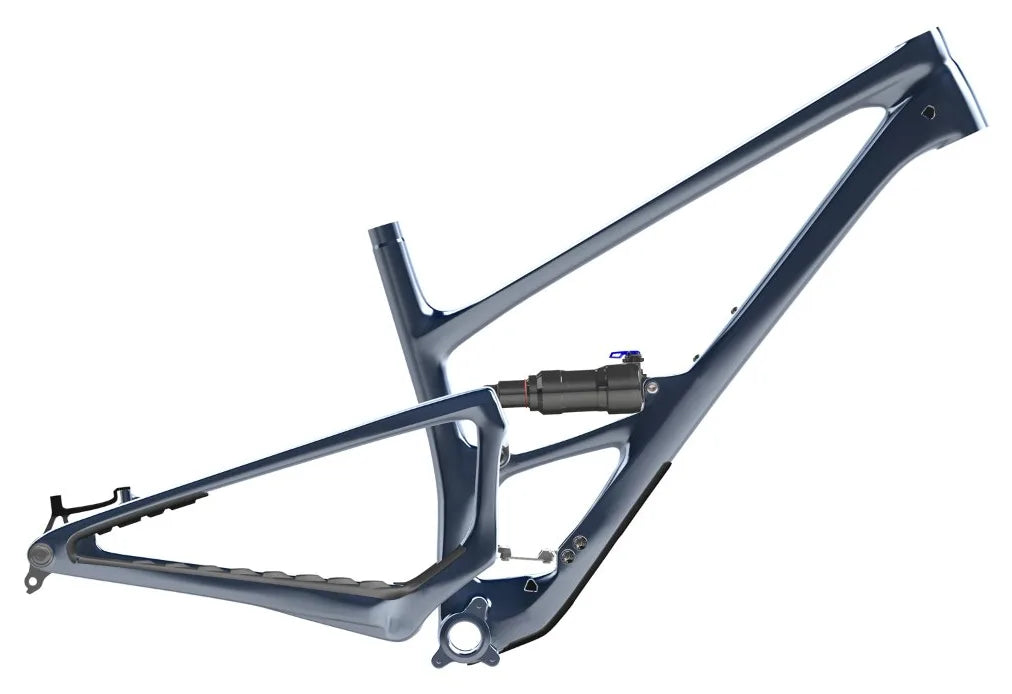
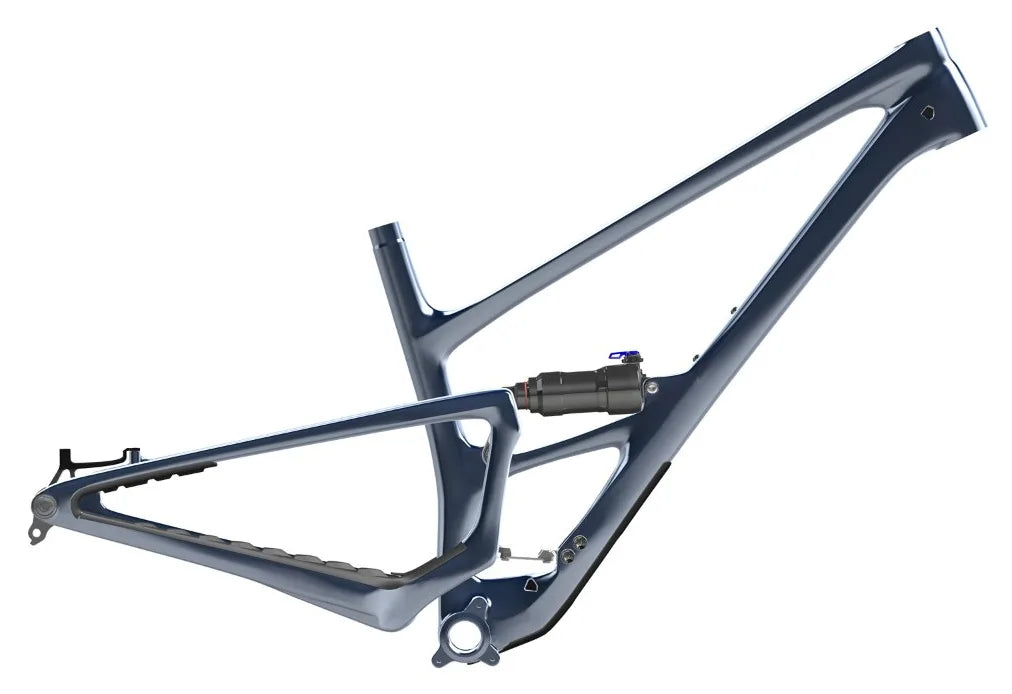
At rest, the Living Link is relaxed, with no stresses imposed. As the suspension compresses, the titanium leaf spring flexes. When the rear axle reaches a point approximately halfway through its travel range, the leaf spring reaches its maximum flex. As the rear axle reaches full compression, the leaf spring relaxes again. The result is a spring contribution to the suspension system. Consider it a boost of superpower when you most need it on long technical climbs.

The Living Link also improves riding efficiency. It does so by enhancing the spring curve in the mid-stroke of the suspension travel. How? By working in tandem with the shock's air spring to make the overall curve more linear in the middle of its travel. A more linear curve increases the suspension response in the mid stroke, where a bike spends most of its time. It's simply a higher quality ride experience than any other suspension technology on the market.

LIGHTER WEIGHT, IMPROVED DURABILITY, GUARANTEED FOR LIFE

Most modern suspension systems are pretty good — when brand new. Their ride quality quickly fades under real-world riding.

Living Link reduces wear and tear by eliminating the most problematic set of bearings in a typical multi-link bike and replacing it with a virtually indestructible titanium leaf spring. That means less maintenance, lighter weight, and one less pivot to impede efficiency.

The Living Link leaf spring is manufactured to maintain the strictest quality control. The use of cutting-edge materials and carefully controlled manufacturing processes results in a leaf spring that can support the weight of two full size pickups. That's pretty damn tough. So tough that we tested it in the laboratory to three million flex cycles without failure. That's the equivalent of riding 7 days a week for 12 years.

GLUEY TRACTION, ROWDY DESCENDING

We are proud to live, work and play in the Rocky Mountains. The riding here is technical and rocky and aggressive. Every Living Link equipped bike has been battle tested on epic trails. Each model has a fine-tuned Living Link system to handle all the nastiness that the Rockies can dish out — both uphill and down, delivering precision control on rowdy descents and gluey traction on technical climbs. That is a rare feat for other rear suspension systems on the market, which are designed to maximize performance in their “open” modes. The Living Link system was designed with an anti-squat response, which enables the rider to climb efficiently with the shock wide open. In addition, the kinematics of the suspension system provide a large pedaling sweet spot. The end game: you will ride more confidently both up and down.

On other suspension systems, pedaling performance is compromised if the shock pressure is too high or too low. Not so with Living Link. It delivers efficient acceleration in a large range of suspension sag settings. Riders who like it super firm, as well as those who like it plush, are all rewarded with a bike that climbs like a goat with its tail on fire. We accomplish this holy grail of climbing efficiency and descending performance by finely tuning the leverage ratio curve to work harmoniously with high quality air shocks.

Every Spot with rear suspension rides on Living Link. Find the one that fits how you ride.

Ride the platform.

SHOP BIKES